Selecting the right brake chambers for heavy-duty trucks and trailers is critical for safety, performance, and regulatory compliance. As one of the most essential components in air brake systems, brake chambers convert compressed air pressure into the mechanical force needed to stop your vehicle. Consequently, this comprehensive guide helps fleet managers, mechanics, and truck owners understand brake chamber types, specifications, and selection criteria to make informed purchasing decisions.
Understanding Brake Chamber Basics
Brake chambers are pneumatic actuators that work as part of your vehicle’s air brake system. When you press the brake pedal, compressed air flows into the chamber, pushing a diaphragm that extends a pushrod. In turn, this pushrod connects to the slack adjuster, which rotates the brake camshaft to apply the brakes. The entire process happens in milliseconds, making proper chamber selection vital for consistent braking performance.
Heavy duty brake chambers come in various sizes and configurations, each designed for specific weight capacities and axle positions. Moreover, the chamber size directly affects braking force—larger chambers generate more stopping power, which is essential for vehicles operating at higher gross vehicle weight ratings (GVWR).
Types of Brake Chambers
Service Chambers
Service chambers are single-function units typically found on steer axles and some trailer applications. Unlike combination chambers, these chambers respond only to service brake applications when the driver presses the brake pedal. Furthermore, they’re more compact than combination chambers, making them ideal where space is limited. Service chambers range from Type 9 to Type 36, with the number indicating the effective diaphragm area.
Spring Brake Chambers (Combination Chambers)
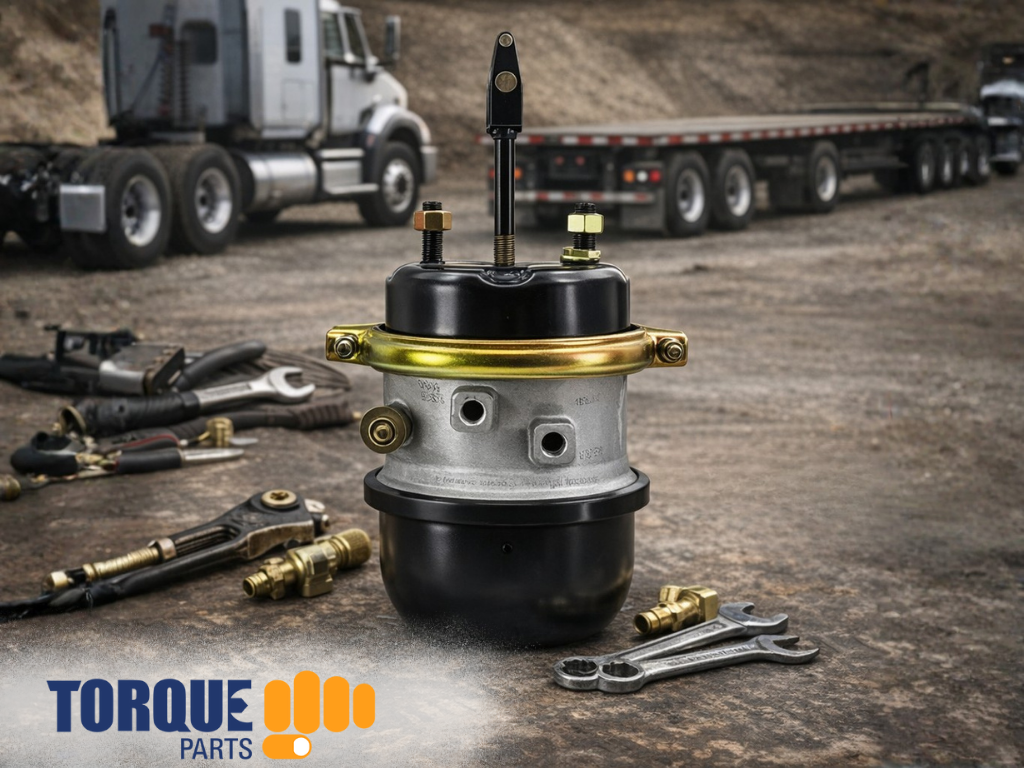
Combination chambers integrate both service and emergency/parking brake functions in a single unit. The service side operates like a standard chamber during normal braking, while the spring side contains a powerful mechanical spring that engages when air pressure drops or when the parking brake is activated. The Type 30/30 is the most common configuration, featuring 30 square inches of effective area on both the service and spring sides.
Long Stroke Chambers
Long stroke brake chambers provide extended pushrod travel—typically 50% more than standard chambers. As a result, these are essential for automatic slack adjusters and help maintain optimal brake adjustment as components wear. Additionally, long stroke chambers are identified by a square port rather than the standard round connection and are increasingly required on modern heavy-duty trucks.
Brake Chamber Sizing Guide
Proper sizing ensures your vehicle meets stopping distance requirements while maintaining brake balance across all axles. Common sizes include:
Type 12: 5.78″ diameter, 1.75″ stroke—suitable for light-duty applications and some steer axles
Type 16: 6.5″ diameter, 2.25″ stroke—medium-duty applications and trailer axles
Type 20: 7″ diameter, 2.25″ stroke—heavier applications requiring more braking force
Type 24: 7.5″ diameter, 2.5″ stroke—heavy-duty single-unit trucks and tractors
Type 30: 8.25″ diameter, 2.5″ stroke—most common for heavy-duty drive and trailer axles
Type 36: 9″ diameter, 3″ stroke—maximum braking force for heavy hauler applications
Importantly, the chamber size must match your vehicle’s specifications, brake shoe size, slack adjuster length, and drum diameter. On one hand, undersized chambers reduce braking effectiveness, while on the other hand, oversized chambers can cause premature brake lockup and uneven wear.
Key Selection Criteria
Vehicle Weight and Configuration
Your vehicle’s GVWR and typical loading determine minimum chamber size requirements. Specifically, heavier vehicles need larger chambers to generate sufficient braking force. Manufacturers certify specific chamber, slack adjuster, and brake combinations to ensure adequate braking performance under real-world operating conditions.
Axle Position
Steer axles typically use service chambers (Type 12, 16, or 20) due to space constraints. In contrast, drive axles on tractors require combination chambers—usually Type 24/24 or 30/30—for both service braking and parking brake capability. Meanwhile, trailer axles commonly use Type 30/30 combination chambers, though some lighter trailers may use Type 24 or smaller.
Pushrod Stroke and Adjustment
Proper pushrod stroke is critical for safe braking. Ideally, when brakes are correctly adjusted, the pushrod should travel between 1.25″ and 1.75″ for standard chambers during a full brake application. However, exceeding the maximum stroke indicates brake adjustment problems that reduce braking efficiency and can lead to brake failure.
Long stroke chambers allow up to 2.5″ of travel on Type 30 chambers, providing more adjustment range and better compatibility with automatic slack adjusters. Consequently, the additional stroke compensates for brake lining wear, extending the interval between manual adjustments.
Quality and Durability Considerations
Chamber quality directly impacts safety and maintenance costs. For instance, premium brake chambers feature reinforced diaphragms that resist tears and maintain air seal integrity under extreme conditions. Additionally, heavy-duty clamping rings prevent air leaks and diaphragm failure. Similarly, corrosion-resistant coatings protect the chamber housing from road salt, moisture, and chemical exposure.
Torque USA manufactures brake chambers engineered for demanding commercial applications. Notably, each chamber undergoes rigorous testing to verify performance, durability, and compliance with federal safety standards. Furthermore, the company backs its products with a robust warranty program, demonstrating confidence in component longevity.
Diaphragm Material
Diaphragm quality determines chamber lifespan and reliability. Specifically, nylon-reinforced rubber diaphragms offer superior tear resistance and flexibility across temperature extremes. In contrast, lower-quality diaphragms crack, develop leaks, and require premature replacement, increasing downtime and maintenance costs.
Housing Construction
Chamber housings must withstand constant vibration, temperature cycling, and environmental exposure. For optimal durability, cast iron or heavy-duty steel construction provides structural integrity under high air pressure. Moreover, properly designed housings include integrated drain provisions to prevent moisture accumulation that can cause freezing and corrosion.
Maintenance and Replacement Indicators
Regular inspection helps identify failing chambers before they cause safety issues. Warning signs include:
- Visible air leaks from chamber seals or diaphragm
- Excessive pushrod travel beyond adjustment limits
- Slow brake application or release response
- Rust or corrosion on chamber housing
- Damaged or deformed mounting brackets
It’s essential to replace brake chambers that show any of these symptoms. Specifically, failed diaphragms allow air pressure loss, reducing braking capacity and potentially causing complete brake failure. Similarly, spring brake chambers with damaged springs may fail to release properly, creating dangerous driving conditions.
Installation Best Practices
Proper installation ensures reliable brake chamber operation and maximizes component life. First and foremost, always verify chamber size matches the vehicle specifications and brake system design. Next, mount chambers securely using grade 8 fasteners torqued to manufacturer specifications. Additionally, align pushrods correctly with slack adjusters to prevent binding and premature wear.
After installation, adjust brakes according to manufacturer procedures and verify pushrod stroke falls within specification. Finally, test the brake system thoroughly before returning the vehicle to service, checking for air leaks, proper brake application, and balanced braking across all axles.
Regulatory Compliance
All brake chambers installed on commercial vehicles must comply with applicable air brake system performance requirements. These requirements define minimum performance criteria for air brake systems, including chamber sizing, reservoir capacity, and stopping distance to ensure safe and consistent braking operation.
Replacement chambers should match or exceed original equipment specifications. Therefore, using non-compliant or improperly sized chambers can result in failed inspections, legal liability, and increased accident risk. Always verify that replacement parts meet applicable DOT standards.
Conclusion
Selecting the appropriate heavy duty brake chambers requires understanding vehicle specifications, application requirements, and quality standards. Key considerations include:
- Chamber type (service, combination, or long stroke) based on axle position and vehicle configuration
- Proper sizing to match vehicle weight and braking requirements
- Quality construction with reinforced diaphragms and corrosion-resistant housings
- Regular inspection and timely replacement to maintain braking performance
Final Answer: Choose brake chambers based on your specific axle position, vehicle weight, and operational demands, always prioritizing quality components that meet or exceed federal safety standards to ensure reliable stopping power and fleet safety.
For reliable brake chambers, complete braking system components, and expert technical support, visit Torque USA or learn more about their commitment to quality at About Torque USA.